When the Heat Is the Hazard: Understanding Invisible Thermal Damage in Arizona Homes
Arizona's summers are legendary for their intensity. Temperatures routinely exceed 110°F across the Valley, and in some interior regions, surface temperatures on rooftops and exterior walls can climb well past 160°F. For homeowners already dealing with property damage—whether from a kitchen fire, a burst pipe, or an electrical fault—that ambient heat doesn't simply sit in the background. It becomes an active participant in the deterioration of your home.
What makes thermal damage particularly treacherous is its tendency to remain hidden. A water stain on a ceiling announces itself. A cracked foundation beam caused by repeated thermal expansion and contraction may not reveal itself until a door frame warps or a tile floor buckles months down the line. By then, what might have been a manageable repair has become a significantly more complex—and expensive—restoration project.
The Science Behind Thermal Stress on Building Materials
Every material in your home expands when heated and contracts when cooled. Under normal temperature fluctuations, this cycle is gradual enough that most materials handle it without consequence. Arizona, however, does not offer normal temperature fluctuations.
Consider a typical Arizona summer day. Overnight lows may drop into the mid-80s, while afternoon highs push past 112°F. That 30-degree daily swing—repeated for months—subjects your home's structural and finish materials to a relentless cycle of stress. Roofing materials, particularly asphalt shingles and modified bitumen membranes, are especially vulnerable. They soften under peak heat, then re-harden as temperatures fall, gradually losing their elasticity and cohesion over time.
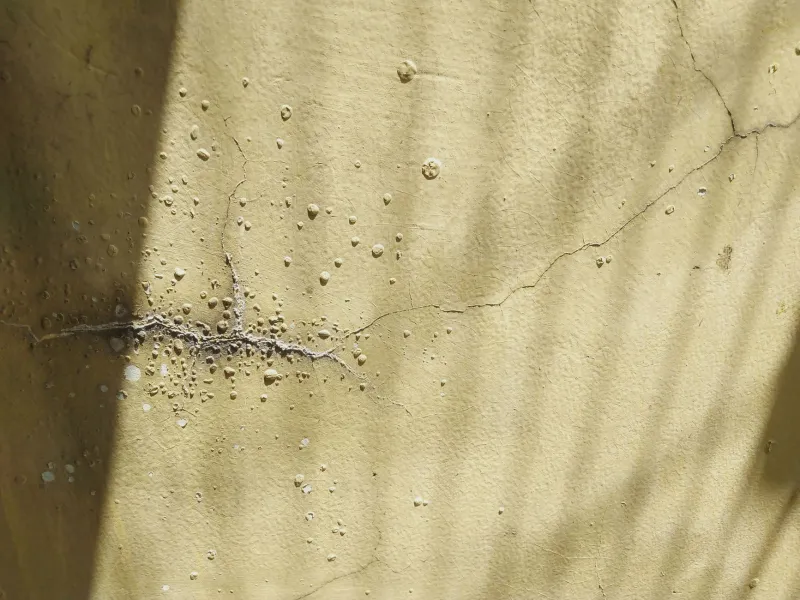
Concrete and masonry are similarly affected. Micro-fractures develop along mortar joints and within concrete slabs as the material cycles through expansion and contraction. These fractures are often invisible to the naked eye until water infiltration—from monsoon rains or a plumbing failure—exploits those pathways and accelerates structural compromise.
Wood framing presents its own complications. When a home sustains fire or flood damage, the moisture content of structural lumber changes dramatically. In Arizona's heat, wet lumber dries at an accelerated rate. Rapid drying causes wood to check, warp, and split—potentially compromising load-bearing members that appeared sound at the time of initial inspection.
How Heat Compounds Damage from Other Sources
Thermal stress rarely acts alone. In most Arizona property damage scenarios, extreme heat functions as a force multiplier, worsening the effects of whatever primary event triggered the damage in the first place.
After a fire: Structural materials that have already been weakened by flame and smoke are far more susceptible to thermal cycling. Steel fasteners and connectors may have experienced partial annealing—a softening of the metal that reduces its load-bearing capacity—during the fire itself. Subsequent heat exposure can accelerate oxidation in these components, leading to corrosion that develops faster than it would in a cooler climate.
After water damage: Moisture trapped within wall cavities, subfloor assemblies, or insulation creates an ideal environment for mold growth under any conditions. In Arizona, the combination of residual moisture and intense heat can drive that growth at a pace that surprises even experienced restoration professionals. Additionally, as trapped water evaporates rapidly under high temperatures, it can cause paint to blister, drywall to delaminate, and adhesives to fail—damage that may not appear until days or weeks after the original water intrusion.
After electrical incidents: Heat-damaged wiring insulation is a serious and frequently underestimated hazard. When electrical components overheat—whether due to a fault, a surge, or proximity to a structural fire—the polymer insulation surrounding wires can become brittle. In Arizona's sustained high temperatures, that brittleness worsens over time. Wiring that passes a visual inspection immediately after an incident may develop insulation cracks and failure points months later, creating a genuine fire risk that the original restoration did not address.
When to Call a Professional: Recognizing the Signs
Homeowners are often tempted to assess property damage on their own, particularly when the visible damage seems limited. In Arizona, that instinct can lead to costly mistakes. Several specific indicators suggest that heat-related complications may be present and that a professional assessment is warranted.
- Doors or windows that stick or no longer close properly following a fire or water damage event may indicate that framing members have shifted due to thermal stress or accelerated drying.
- Tile floors that crack, pop, or develop hollow-sounding sections after a damage event may be signaling that the adhesive layer beneath has failed due to heat and moisture interaction.
- Discoloration or blistering on exterior walls that appears weeks after a repair may indicate that residual moisture is still present and being driven outward by heat.
- Persistent musty odors despite apparent drying can indicate that mold has established itself within wall cavities where heat-accelerated evaporation created the right conditions for growth.
- Flickering lights or tripped breakers following a heat or fire event should always prompt a professional electrical inspection, even if the wiring appeared undamaged initially.
None of these symptoms should be dismissed as cosmetic. Each one can represent the leading edge of a more serious structural or safety issue.
Why Standard Restoration Approaches Can Fall Short
Conventional restoration protocols are often designed with more temperate climates in mind. Drying timelines, material assessments, and structural inspections that work well in the Pacific Northwest or the Midwest may not account for the accelerated deterioration dynamics present in Arizona. A drying protocol that assumes a certain ambient temperature and humidity level will produce inaccurate results when the actual conditions are dramatically different.
Effective restoration in Arizona requires professionals who understand the specific ways that extreme heat interacts with damaged materials—and who calibrate their methods accordingly. That means using moisture monitoring equipment suited to the local climate, extending inspection timelines to catch delayed damage manifestation, and applying thermal imaging technology to identify heat-related anomalies within wall assemblies and roofing systems that are invisible from the surface.
The Case for Early Intervention
The single most important factor in limiting the long-term cost of heat-compounded damage is the speed of professional intervention. Secondary damage—the deterioration that develops in the weeks following a primary damage event—is almost always more expensive to remediate than the original incident would have been if addressed comprehensively from the start.
At A-1 Recovery Services of Arizona, we work with homeowners across the state who have discovered, sometimes painfully, that waiting to see whether damage resolves on its own is rarely a sound strategy in this climate. Our teams are trained to assess not just what is visible today, but what Arizona's heat is likely to produce tomorrow.
If your home has sustained any form of property damage—fire, water, electrical, or otherwise—do not allow the assumption of visible-only damage to guide your decision-making. In Arizona, what you cannot see is often what matters most. A professional assessment costs far less than the secondary damage that develops when thermal stress is left unaddressed.
Restoring a home in Arizona means understanding the environment that home exists within. Heat is not a passive backdrop here. It is an active force—and treating it as such is the foundation of a truly complete recovery.