Dry Land, Deep Damage: Why Arizona's Arid Climate Conceals Structural Problems Long After a Disaster
There is a common assumption among Arizona homeowners that the desert works in their favor after a flood, a burst pipe, or a monsoon intrusion. The logic seems reasonable enough: if the air is dry and the sun is relentless, moisture will disappear quickly, and with it, the danger. Within a day or two, surfaces feel firm underfoot, walls appear dry to the touch, and the crisis seems to have resolved itself.
That assumption is one of the most consequential mistakes a homeowner can make.
Arizona's arid environment does not eliminate water damage — it disguises it. The very conditions that make the desert uncomfortable for moisture on the surface actively drive that moisture inward, deeper into structural components where it lingers, weakens, and eventually forces a reckoning that arrives weeks or months after the original event.
The Deceptive Speed of Surface Drying
When water enters a home in a humid climate, the slow pace of evaporation gives homeowners and contractors time to observe the spread of damage. Walls stay visibly wet. Floors remain soft. The problem is traceable and measurable over an extended period.
In Arizona, that window closes fast — sometimes within 24 to 48 hours. Surface materials like drywall, flooring, and paint dry rapidly under the influence of low relative humidity and high ambient temperatures. To the untrained eye, this looks like recovery. In practice, it is closer to concealment.
As exterior surfaces dry, the moisture that has already penetrated deeper layers — into wall cavities, subfloor assemblies, concrete slabs, and wooden framing — has nowhere to go quickly. It becomes trapped. The outer shell of a wall may feel completely dry while the interior remains saturated, creating the precise conditions that support mold growth, material degradation, and structural compromise.
What Happens Inside the Walls
Arizona homes are built to manage heat, not to resist prolonged moisture exposure. Many residential structures in the region rely on wood framing, OSB (oriented strand board) sheathing, and standard drywall — all of which are vulnerable to water intrusion when that intrusion is allowed to persist undetected.
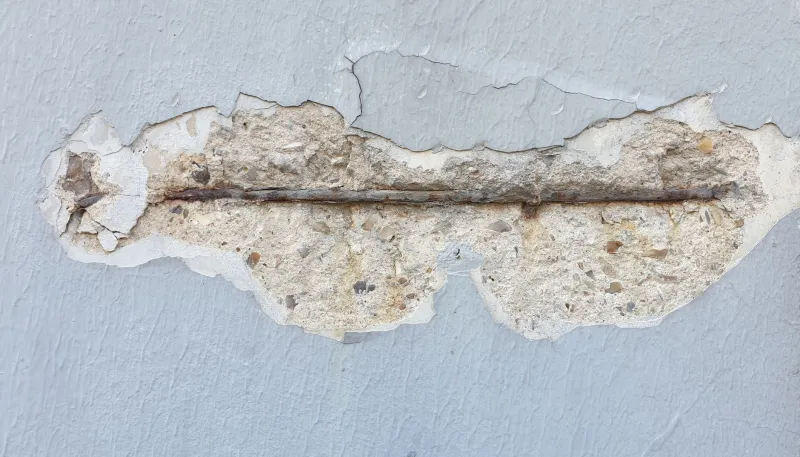
When moisture becomes trapped inside wall cavities, wood framing begins to absorb it. Over time, this leads to swelling, warping, and in prolonged cases, the early stages of rot. OSB, which is particularly sensitive to moisture, can begin to delaminate — losing its structural integrity even while its outer surface appears intact. Insulation batts, once wet, lose their thermal effectiveness and can become a reservoir for biological growth.
The critical issue is that none of this is visible from the surface. A homeowner who walks through a room two days after a water event and finds dry walls and a firm floor has not confirmed that the structure is sound. They have confirmed only that the surface has dried.
Foundation Concerns Unique to the Desert
Arizona's soil composition introduces another layer of risk that homeowners outside the region may not fully appreciate. Much of the state sits on expansive clay soils — materials that swell significantly when they absorb water and contract as they dry. This cycle of expansion and contraction, accelerated by the desert's rapid evaporation rates, places enormous stress on concrete slab foundations.
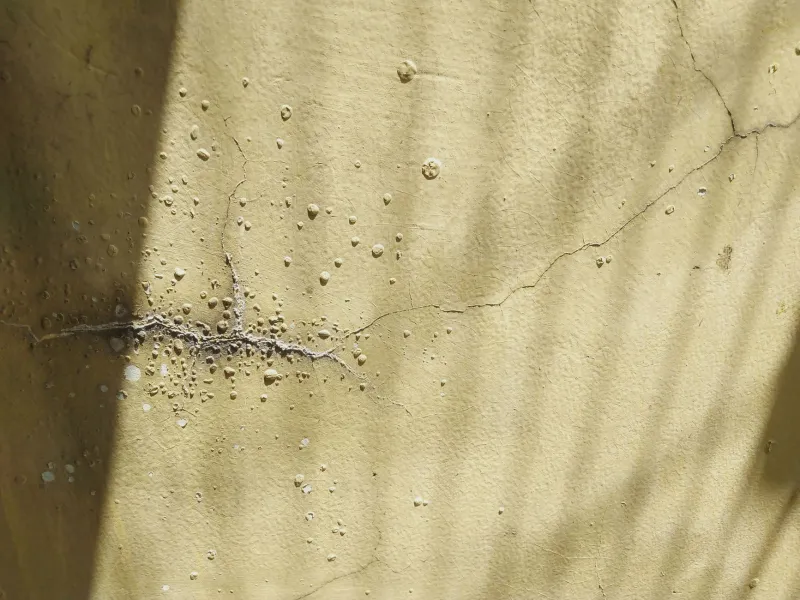
After a significant water event, soil beneath a slab may absorb moisture unevenly. As Arizona's climate then pulls that moisture out rapidly from the exposed perimeter while deeper soil remains saturated longer, differential movement occurs. One section of a foundation may shift while another remains stable, producing cracks in the slab, misaligned door frames, and stress fractures in interior walls.
These signs frequently appear not immediately after a disaster, but two to six months later — long after most homeowners have mentally closed the chapter on the original incident. By the time the evidence becomes visible, the underlying cause has often been compounding for weeks.
The Mold Calculation in a Dry Climate
Many Arizona residents believe that low humidity protects them from mold. This is partially true under normal conditions. However, the microenvironment inside a wet wall cavity or beneath a damp subfloor operates independently of outdoor relative humidity. If moisture content within a building material exceeds roughly 19 percent, mold can establish itself regardless of what the outdoor thermometer reads.
The danger in Arizona is not that mold is more common — it is that it is less expected. Homeowners in wetter climates are conditioned to treat water intrusion as a mold risk and act accordingly. In the desert, that vigilance is often absent. By the time musty odors or visible discoloration appear, a mold colony may be well-established within materials that appeared dry on the surface weeks earlier.
Why Professional Inspection Cannot Be Substituted
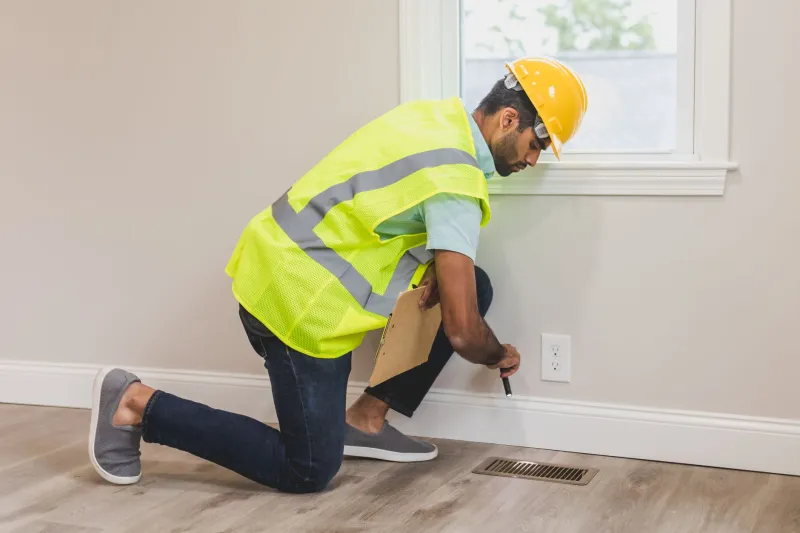
The tools that make professional water damage assessment reliable are precisely the ones that surface observation cannot replace. Thermal imaging cameras detect temperature differentials that indicate trapped moisture behind walls and beneath flooring. Moisture meters provide quantitative readings at depth, distinguishing between a wall that is genuinely dry and one that merely feels that way. Borescope cameras allow inspectors to examine wall cavities without destructive opening.
In Arizona's climate, these tools are not optional enhancements — they are fundamental to an accurate damage assessment. The rapid surface drying that characterizes the desert environment makes visual inspection unreliable in ways that would be far less pronounced in a more humid region.
Professional restoration teams also understand the timeline of concealed damage specific to Arizona conditions. They know that a slab inspection performed immediately after a flood event may not reveal the differential movement that will emerge as soils complete their dry-out cycle. Follow-up assessment, scheduled at appropriate intervals, is part of responsible restoration practice in this environment.
What Homeowners Should Do After Any Water Event
Regardless of how quickly surfaces appear to dry, the following steps remain critical for Arizona homeowners following any significant water intrusion:
Document everything immediately. Photograph and video the extent of visible water before any drying occurs. This record is essential for insurance purposes and provides a baseline for professional assessment.
Do not assume surface dryness equals structural safety. A firm floor and a dry wall are starting points for investigation, not conclusions.
Request a professional moisture assessment within 48 to 72 hours. The sooner concealed moisture is identified, the more limited the intervention required to address it.
Monitor for delayed structural symptoms. Sticking doors, new cracks in drywall, and uneven flooring appearing weeks after an event are not coincidences — they are signals that warrant immediate attention.
Keep records of the original event. If foundation issues emerge months later, documentation of the precipitating water event will be important for both contractors and insurance adjusters.
The Longer View on Desert Recovery
Arizona is a state that demands a particular kind of respect from those who build and maintain homes within it. The climate that draws millions of residents with its sunshine and warmth is also one that does not forgive shortcuts in property restoration. The same forces that make the desert beautiful — its heat, its dryness, its intensity — are the forces that accelerate and conceal damage when water finds its way where it does not belong.
At A-1 Recovery Services of Arizona, we have built our practice around understanding exactly these dynamics. Restoring a home in this environment means looking beyond what the surface presents and examining what the structure holds. It means accounting for the soil beneath the slab, the cavity behind the wall, and the timeline that extends well past the day surfaces feel dry again.
If your property has experienced any form of water intrusion — regardless of how quickly it appeared to resolve — a professional assessment is not an excess of caution. In Arizona, it is simply good judgment.