Dry Air, Hidden Danger: Why Arizona Homes Can Harbor Mold Long Before You Notice
Arizona's low relative humidity is frequently cited as one of the state's most appealing qualities — a climate so dry, the thinking goes, that mold simply cannot take hold. For the vast majority of outdoor surfaces, that logic holds. But inside the walls, beneath the floors, and above the ceilings of Arizona homes, an entirely different microenvironment can exist — one where moisture lingers far longer than most homeowners ever expect.
The result is a deceptive timeline. By the time mold becomes visible or detectable by smell, it has often been growing, undisturbed, for weeks or even months. Understanding why this happens — and what makes Arizona properties particularly vulnerable — is essential for any homeowner who has experienced a water intrusion event, no matter how minor it may have seemed at the time.
Why Arizona's Climate Creates a False Sense of Security
The outdoor humidity levels across much of Arizona — particularly in the Phoenix metro area, Tucson, and the surrounding desert communities — regularly fall between 10 and 30 percent. At those levels, mold spores that land on exterior surfaces have little opportunity to germinate. This reality has led to a widespread assumption that mold is a problem belonging to humid climates like Florida or the Gulf Coast, not the Sonoran Desert.
That assumption, however, only accounts for what happens outside. The interior conditions of a home can diverge dramatically from the outdoor environment, particularly in spaces that lack adequate ventilation or that have experienced any form of moisture intrusion. When a pipe leaks inside a wall cavity, when a roof develops a slow seep during monsoon season, or when an air conditioning unit condenses more moisture than its drainage system can handle, that water does not simply evaporate into the dry desert air. It becomes trapped.
Enclosed spaces — attics, crawl spaces, the interior of wall assemblies, the area beneath bathroom tile — act as insulated pockets. Outdoor aridity has little influence over moisture levels within these areas, and in some cases, the same insulation that keeps Arizona homes cool in summer also prevents moisture from escaping once it has entered.
The Mold Growth Timeline Most Homeowners Never Witness
Mold does not require standing water to grow. It requires a moisture content on a surface — drywall, wood framing, insulation batts, ceiling joists — that exceeds approximately 70 percent relative humidity at the material level. Under those conditions, common mold species can begin colonizing a surface within 24 to 48 hours of initial wetting.
In a well-ventilated, climate-controlled room, a spill or minor leak might dry out quickly enough to prevent germination. But inside a wall cavity following a slow plumbing leak, or in an attic corner where a flashing failure allowed monsoon rain to seep in, drying conditions are far less favorable. The structural materials retain moisture. Insulation compounds the problem by holding water against wood framing. And because nothing is visible from the living space, there is no prompt to investigate.
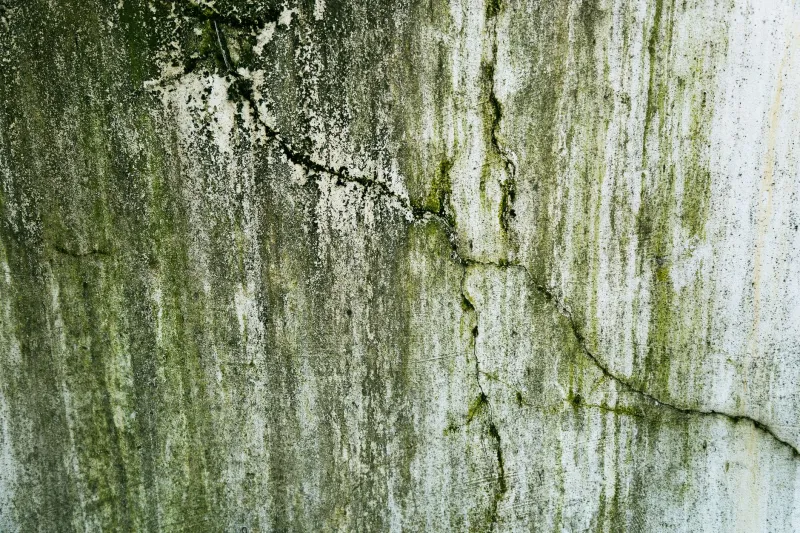
By the time a homeowner notices a musty odor, sees discoloration on a wall surface, or experiences unexplained respiratory irritation, the colony may have been established for 30, 60, or even 90 days. At that stage, what began as a localized moisture problem has often spread across multiple square feet of structural material.
Where Arizona Homes Are Most Vulnerable
Certain areas of Arizona homes carry elevated risk due to their combination of limited airflow, proximity to moisture sources, and infrequent inspection.
Attic spaces are among the most commonly overlooked. During monsoon season, even minor roof damage can introduce water that soaks into the decking and insulation. Attic ventilation, if improperly designed or obstructed, may not provide sufficient airflow to reverse this moisture accumulation. Homeowners rarely enter their attics between seasons, which means problems can develop undetected for the entire period between one storm event and the next.
Wall cavities adjacent to plumbing present similar risks. A slow drip from a supply line or drain connection may not produce enough water to stain the drywall immediately. Instead, moisture accumulates within the cavity, saturating insulation and wicking up into the framing. These leaks often go undetected until a homeowner notices soft spots in the wall, a persistent odor, or elevated water bills.
Crawl spaces, where present, are particularly susceptible. Ground moisture can migrate upward into unventilated crawl spaces, creating conditions favorable to mold growth on the underside of flooring systems. Many Arizona homes with pier-and-beam construction or additions built over unfinished crawl spaces carry this risk.
Bathroom and kitchen tile assemblies are another concern. Grout and caulk deteriorate over time, allowing water to penetrate behind tile surfaces. Because these areas are routinely exposed to water, the underlying substrate — cement board, drywall, or wood framing — can remain persistently damp without any single event triggering an obvious warning sign.
Why Professional Inspection Reveals What Homeowners Cannot See
The challenge with concealed mold growth is that the most reliable indicators — discoloration, odor, visible colonies — are lagging signals. They appear after the problem is already well established. Homeowners conducting their own visual assessments are, by definition, only able to evaluate surfaces they can see.
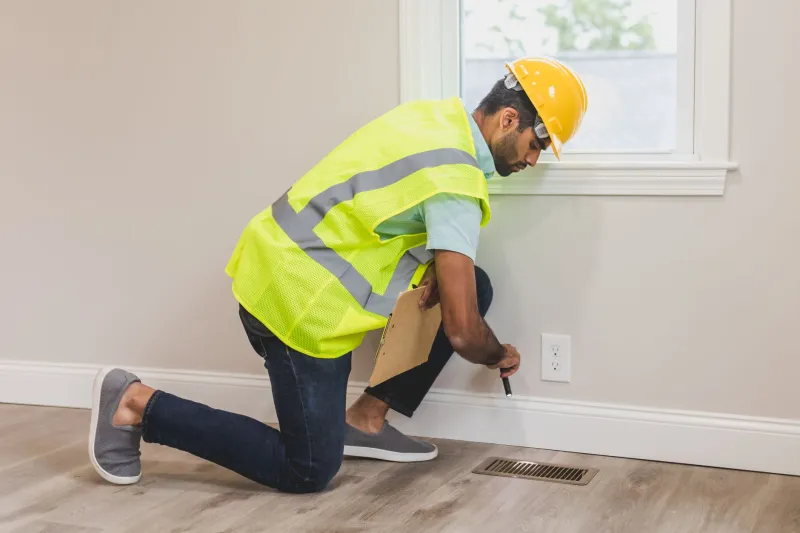
Professional moisture inspections employ tools and techniques that extend the assessment beyond visible surfaces. Thermal imaging cameras can detect temperature differentials within wall assemblies that indicate the presence of trapped moisture. Moisture meters allow technicians to measure the water content of building materials without requiring destructive access. In cases where contamination is suspected but not confirmed, air sampling can identify elevated spore counts before any visible growth is apparent.
For Arizona homeowners who have experienced any form of water intrusion — a monsoon roof leak, a plumbing failure, an appliance malfunction, or flooding from a storm event — a professional assessment is not a precautionary luxury. It is the only reliable method of confirming whether hidden moisture has created conditions favorable to mold development.
Taking Action Before the Timeline Advances
The most effective intervention in mold development is early moisture remediation. When water intrusion is identified and addressed promptly — materials dried to acceptable moisture content within 24 to 48 hours — the conditions necessary for mold growth are eliminated before colonization can begin.
When that window has passed, or when mold growth is discovered during an inspection, professional remediation is necessary. This involves not only the removal of contaminated materials but also the identification and correction of the underlying moisture source, followed by verification that affected areas have been restored to acceptable conditions.
At A-1 Recovery Services of Arizona, our teams understand the specific ways in which desert properties experience water damage and the unique vulnerabilities that Arizona's building practices and climate create. Whether a moisture problem has just been discovered or a homeowner suspects that an older event may have left behind unresolved damage, we are equipped to assess, remediate, and restore.
Arizona's dry air is genuinely protective — outdoors. Inside your home, the only reliable protection is knowledge, early detection, and a response that addresses moisture before the hidden timeline runs its course.